Prices, subsidies and tariffs change from time to time. Call us or fill the form for the latest figures.
The 3 kW system is the most popular size for Indian homes, and the reason is simple: it is the capacity at which the PM Surya Ghar Muft Bijli Yojana subsidy reaches its maximum. Below we break down the indicative price, generation, roof space and the type of household a 3 kW system fits best.
What does a 3 kW solar system cost in 2026?
A 3 kW system is three kilowatt-peak (kWp) of panels plus an inverter, mounting structure, cables, ACDB/DCDB, earthing and lightning protection. Residential on-grid systems cost roughly ₹55,000–70,000 per kW before subsidy in 2026. GST on solar devices has been 5% since 22 September 2025, which helped prices. On the other hand, ALMM List-II (cells), effective 1 June 2026, may add around ₹3,000 per kW because subsidised systems must use domestically made cells.
| Item | Indicative amount (2026) |
|---|---|
| 3 kW on-grid system (DCR panels), before subsidy | ₹1,65,000 – ₹2,10,000 |
| Central subsidy (CFA) under PM Surya Ghar | ₹78,000 (₹30,000 × 2 kW + ₹18,000 for 3rd kW) |
| Special category states (NE, HP, Uttarakhand, J&K etc.) | ₹85,800 (₹33,000 × 2 + ₹19,800) |
| Net cost after central subsidy | ₹87,000 – ₹1,32,000 |
| UP state top-up via UPNEDA (reported, confirm) | Up to ₹30,000 additional |
| 3 kW hybrid with ~5 kWh lithium battery | ₹2,80,000 – ₹3,80,000 (battery not subsidised) |
These figures are indicative. Your final price depends on roof type (RCC flat roof vs tin shed vs elevated structure), panel technology such as TOPCon or mono PERC, inverter brand and cable runs. Try the solar subsidy calculator to see your own number.
How much can you save?
Get free site surveyHow many units does a 3 kW system generate?
In most Indian locations, 1 kW of panels produces about 4–5 units (kWh) per day on average, according to commonly used MNRE generation benchmarks. So a 3 kW system gives:
- Per day: 12–15 units on average
- Per month: 360–450 units
- Per year: 3,600–4,500 units
Rajasthan and Gujarat sit at the top of this range; Kerala, the North-East and foggy north Indian winters sit lower. Summer heat also reduces output by a few percent because panels lose efficiency as they get hotter. Our guide on performance ratio and generation loss explains why.
How much roof area does a 3 kW system need?
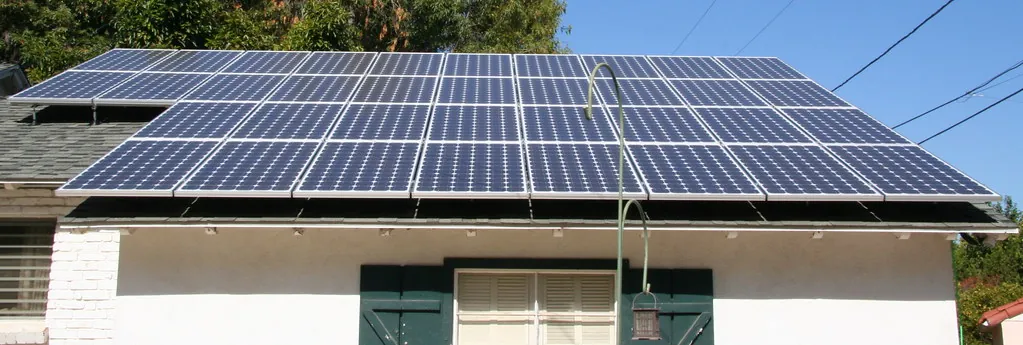
Budget about 80–100 sq ft of shadow-free roof per kW, so 240–300 sq ft for 3 kW. With 540–580 W modules you need 5 or 6 panels. South-facing panels at a tilt close to your latitude (around 20–28° for most of India) give the best yield. Water tanks, parapet walls and neighbouring buildings can cast shadows in winter mornings, so ask your installer to check shading loss across the year, not just at noon on survey day.
How much will a 3 kW system save?
Savings depend on your tariff slab. Residential tariffs across states range from roughly ₹5 to ₹9 per unit, with higher slabs costing more. Here is a simple estimate:
| Average tariff | Annual generation (4,000 units) | Approx. yearly saving | Simple payback on ₹1.1 lakh net cost |
|---|---|---|---|
| ₹6/unit | 4,000 kWh | ₹24,000 | ~4.5 years |
| ₹7/unit | 4,000 kWh | ₹28,000 | ~4 years |
| ₹8/unit | 4,000 kWh | ₹32,000 | ~3.5 years |
Fixed charges on your bill do not disappear, and the value of exported units depends on your state’s net metering rules. Use the solar ROI calculator with your actual bill.
Who should choose a 3 kW solar system?
A 3 kW system is a good fit if:
- Your average monthly consumption is about 300–450 units (bill of roughly ₹2,000–3,500).
- You run 1–2 fans-and-lights rooms, a fridge, TV, washing machine, geyser and one AC for part of the year.
- Your sanctioned load is 3 kW or more (many DISCOMs cap solar capacity at sanctioned load).
- You want maximum subsidy per rupee spent, since 3 kW is where the ₹78,000 cap is reached.
If you use more than 500 units a month or plan to add an EV or a second AC, look at our 5 kW solar system guide. Not sure about size? Read how many solar panels do I need or use the rooftop solar calculator.
On-grid or hybrid for a 3 kW home?
An on-grid system is the cheapest and qualifies for subsidy, but it switches off during a grid outage for safety (anti-islanding). A hybrid inverter with a battery keeps essential loads running during power cuts, which matters in areas with frequent load-shedding. Compare them in on-grid vs off-grid vs hybrid solar.
How do you get the subsidy on a 3 kW system?
- Register on the national portal, pmsuryaghar.gov.in, with your electricity consumer number.
- Get feasibility approval from your DISCOM.
- Install through an empanelled vendor using ALMM-listed DCR modules.
- Apply for net meter installation and commissioning inspection.
- Submit bank details; the subsidy is credited to your account after commissioning.
The full process is covered in how to apply for PM Surya Ghar subsidy. The scheme currently runs until 31 March 2027, and concessional collateral-free loans (reported around 7% for up to 3 kW through public sector banks) are available; check current rates with your bank or on our solar financing page.
- A 3 kW on-grid system costs about ₹1.65–2.1 lakh before subsidy and ₹87,000–1.32 lakh after the ₹78,000 central subsidy (2026, indicative).
- It generates roughly 12–15 units a day, or 360–450 units a month.
- You need 240–300 sq ft of shadow-free roof and 5–6 modern panels.
- Best for homes using 300–450 units a month; payback is typically 3.5–5 years.
- UP residents may get an extra UPNEDA top-up; confirm the current rate before budgeting.
Want an exact price for your roof? SolarEMS designs, supplies and installs subsidy-ready rooftop systems from Sarnath, Varanasi, and supplies across India. Get a free 3 kW solar quote with a site survey and generation estimate.
Send your electricity bill or a roof photo on WhatsApp and we will suggest the right system and price.
Frequently asked questions
What is the price of a 3 kW solar system in India in 2026?
An on-grid 3 kW rooftop system with DCR panels typically costs about ₹1,65,000 to ₹2,10,000 before subsidy as of 2026. After the ₹78,000 PM Surya Ghar central subsidy, the net cost is roughly ₹87,000 to ₹1,32,000. Prices are indicative and vary by state, brand and roof type.
How many units does a 3 kW solar system generate per day?
In most of India a 3 kW system generates about 12 to 15 units (kWh) per day on average, or roughly 360 to 450 units per month and 3,600 to 4,500 units per year. Output is higher in summer and lower in monsoon and foggy winter weeks.
How much roof area is needed for a 3 kW solar system?
Plan for about 240 to 300 sq ft of shadow-free roof. With modern 540 to 580 W panels, a 3 kW system uses 5 to 6 panels, plus walking space for cleaning and maintenance.
Can a 3 kW solar system run an AC?
A 3 kW on-grid system can offset the energy of one 1.5 ton inverter AC used 6 to 8 hours a day along with normal household loads. During a power cut, an on-grid system shuts down, so you need a hybrid system with battery for backup.
Is there an extra state subsidy for 3 kW solar in Uttar Pradesh?
UP has been reported to offer a state top-up through UPNEDA of about ₹15,000 per kW up to ₹30,000 for residential grid-connected systems, on top of the central subsidy. Confirm the current rate and conditions with UPNEDA before you budget for it.

Written and reviewed by our solar design & energy specialists. Figures are indicative as of November 2026 - always confirm current rules with the national portal or your DISCOM. About us
#3 kW solar system#PM Surya Ghar subsidy#rooftop solar#solar price India