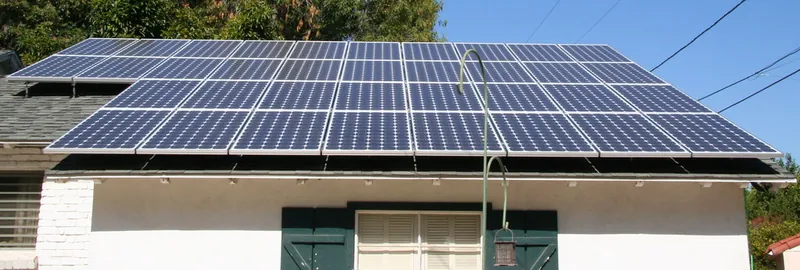
Walk into any solar showroom in 2026 and you will hear four terms: Mono PERC, TOPCon, HJT and bifacial. They describe how the solar cell is built and how the module captures light. The differences matter in India because high temperatures, dust and limited roof space all affect real-world output. Here is what each means and which one fits your needs.
What is a Mono PERC solar panel?
PERC stands for Passivated Emitter and Rear Cell. A reflective, passivating layer on the back of a monocrystalline cell bounces unused light back into the cell, improving efficiency. Mono PERC dominated the Indian market for years and is still widely available, including as DCR modules.
- Typical module efficiency: about 21–22.5%
- Temperature coefficient: around −0.34 to −0.37% per °C
- Strength: mature, proven, lower price
- Weakness: higher light-induced degradation and heat loss than newer cells
What is a TOPCon solar panel?
TOPCon (Tunnel Oxide Passivated Contact) adds an ultra-thin oxide layer and doped polysilicon at the rear of an n-type cell. This cuts electrical losses and raises efficiency. Most large manufacturers, including several in India, have been moving production lines to TOPCon.
- Typical module efficiency: about 22.5–24%
- Temperature coefficient: around −0.29 to −0.32% per °C
- Strength: better heat performance, lower degradation, often bifacial by design
- Weakness: slightly higher price than PERC, though the gap has narrowed
What is an HJT solar panel?
HJT (Heterojunction Technology) sandwiches a crystalline silicon wafer between thin layers of amorphous silicon. The result is excellent efficiency and the best heat tolerance among mainstream technologies.
- Typical module efficiency: about 23–25%
- Temperature coefficient: around −0.24 to −0.27% per °C
- Strength: least output loss in heat, very low degradation
- Weakness: highest cost, fewer DCR options in India so far
What does bifacial mean?
Bifacial is not a cell type but a module design. Instead of an opaque back sheet, the rear has glass, so light reflected from the roof or ground also generates power. TOPCon and HJT modules are often bifacial. Rear-side gain depends on mounting height and surface reflectivity (albedo): roughly 5–15% on elevated structures over white terraces, but much less when panels sit close to a dark roof.
How do the technologies compare?
| Parameter | Mono PERC | TOPCon | HJT |
|---|---|---|---|
| Typical module efficiency | 21–22.5% | 22.5–24% | 23–25% |
| Temperature coefficient (Pmax) | −0.34 to −0.37%/°C | −0.29 to −0.32%/°C | −0.24 to −0.27%/°C |
| First-year degradation (typical warranty) | ~2% | ~1% | ~1% |
| Annual degradation after year 1 | ~0.55% | ~0.40% | ~0.35–0.40% |
| Bifacial option | Available | Common | Common |
| Relative price | Lowest | Moderate | Highest |
| Best for | Budget homes, ample roof | Most homes and C&I | Premium, space-limited, hot sites |
Figures are typical ranges from manufacturer datasheets; always check the specific module’s datasheet and warranty.
Why does heat performance matter in India?
Panels are rated at 25 °C cell temperature, but on an Indian rooftop in May, cell temperature can reach 60–70 °C. At 65 °C, that is 40 °C above standard conditions. A PERC panel with a −0.35%/°C coefficient loses about 14% of rated output, while a TOPCon panel at −0.30%/°C loses about 12%. Across a year in Rajasthan, Gujarat, Telangana or Vidarbha, that difference adds up to noticeably more units.
Which panel should you choose?
- Subsidy-linked home system with enough roof: DCR Mono PERC or DCR TOPCon, whichever offers better value per unit generated.
- Limited roof space: TOPCon or HJT for more watts per square foot.
- Elevated structure over a white terrace or carport: bifacial TOPCon.
- Factories and commercial roofs: TOPCon bifacial is often the best lifetime value; see commercial and industrial solar.
Remember: for PM Surya Ghar, the panel must be DCR and ALMM-listed regardless of technology. Read DCR vs non-DCR panels to understand why.
What else should you check on a datasheet?
- Wattage tolerance (prefer positive tolerance, for example 0 to +5 W)
- Product warranty (often 12–15 years or more) and performance warranty (25–30 years); see our warranty guide
- IEC and BIS certifications and ALMM listing
- Mechanical load rating for high-wind coastal areas
- PID resistance for humid coastal regions
Key takeaways
- Mono PERC: proven and affordable, but more heat loss and degradation.
- TOPCon: the 2026 sweet spot for efficiency, heat tolerance and price.
- HJT: best heat performance, premium price, fewer DCR options.
- Bifacial gains depend on mounting height and roof reflectivity.
- For subsidy, any technology must be DCR and ALMM-listed.
Want help choosing the right module for your roof and budget? Browse our solar products or get a free quote from SolarEMS with a generation estimate for each option.
Frequently asked questions
Which solar panel technology is best for India?
For most rooftops in 2026, TOPCon panels offer the best balance of efficiency, heat tolerance and price. Mono PERC remains a reliable budget option, while HJT suits premium projects and bifacial panels deliver extra gain on elevated structures over reflective surfaces.
Are TOPCon panels better than Mono PERC?
Generally yes. TOPCon cells typically reach higher efficiency, lose less power in high temperatures and degrade more slowly than PERC. The price gap has narrowed, and many manufacturers in India are shifting production to TOPCon.
Do bifacial panels work on a normal rooftop?
They work, but the rear-side gain is small when panels are mounted close to a dark roof. Bifacial panels perform best on elevated structures over white or light-coloured surfaces, where rear-side gain can be roughly 5 to 15%.
Are DCR panels available in TOPCon?
Yes. Several Indian manufacturers now produce DCR modules using domestically made TOPCon and PERC cells. Availability, wattage and price vary, so check the ALMM list and datasheet.

Written and reviewed by our solar design & energy specialists. Figures are indicative as of November 2026 — always confirm current rules with the national portal or your DISCOM. About us